- Autobiographical Order
- Posts
- Four Tet and unexpected, but deserved, mainstream success
Four Tet and unexpected, but deserved, mainstream success
Plus: Pharoah Sanders, Steve Reid, The Body and Floating Points

Jeffrey Terich
April 24, 2026
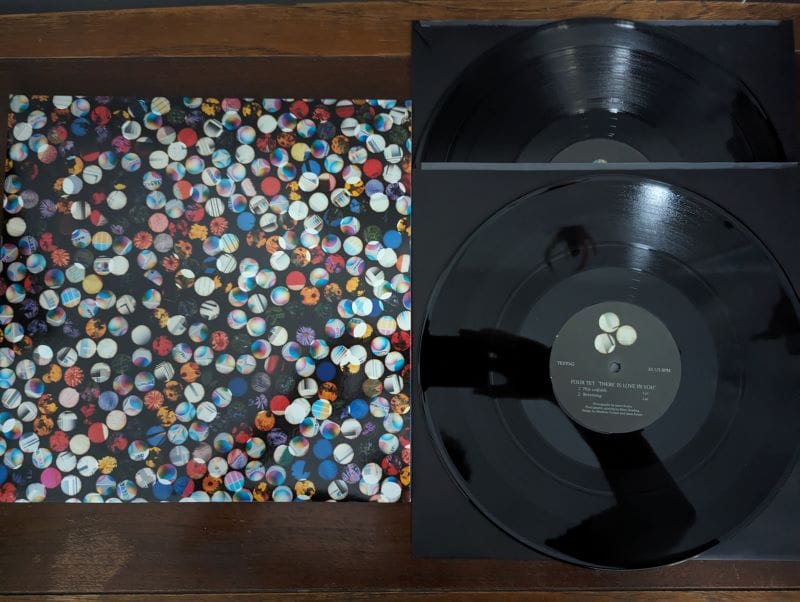
No. 1446: Four Tet - There Is Love in You
It was about a decade ago when I started to realize that Four Tet was growing into a more mainstream phenomenon. He booked a show at San Diego venue The Music Box, with Andy Stott as an opener. I’ve been a Four Tet fan for a while, but Andy Stott was a little more fresh in my mind at the time, as he’d released a series of records all in a row that bowled me over, one after another, with booming, shadowy dub techno creations that felt more like vintage 4AD goth than contemporary EDM. It felt like a natural passing of the torch, given that Four Tet himself has been a pioneering producer for several decades, including collaborations with a jazz artist in this very post!
A colleague of mine who was certainly then and still is now more tuned into the festival rave scene—and whose taste doesn’t overlap all that much with mine—asked if I was going to see Four Tet. And while the gears turned slowly, that was about when I realized that Kieran Hebden, longtime indie electro darling, was really breaking through with a new and much bigger audience.
And honestly? Good for him. He’s been on huge festival stages and worked with Skrillex and Fred Again, and while I don’t particularly like either of those artists, they do numbers, and he seems to be having fun with it. (Though he also works with more underground artists like William Tyler, which makes for even more interesting results—he does whatever the fuck he wants, and that’s the kind of artist I can’t help but root for.) And you can’t honestly say he hasn’t put in the work; Four Tet not only rose very gradually but likewise had some music industry lawsuits to show for it. But all his music is now being released via his own label, Text, including all his old Domino releases (which is partially where the lawsuit comes in). Pretty much his entire catalog is great, and while I have a particular fondness for his 2001 album Rounds, There Is Love In You is the one with all the bangers.
Like, just drop the needle and you get an instant dance party. Some of it’s a little more ethereal and twinkly, sure, but have you heard “Love Cry.” Have you HEARD “Love Cry”? This thing is nonstop pulse. It’s what the dancefloor is supposed to sound like. Is this his best album? I don’t know, but it’s a contender for sure. The peak of what he’s capable of, and as it turns out, he’s capable of doing this kind of thing pretty consistently. Rating: 9.2
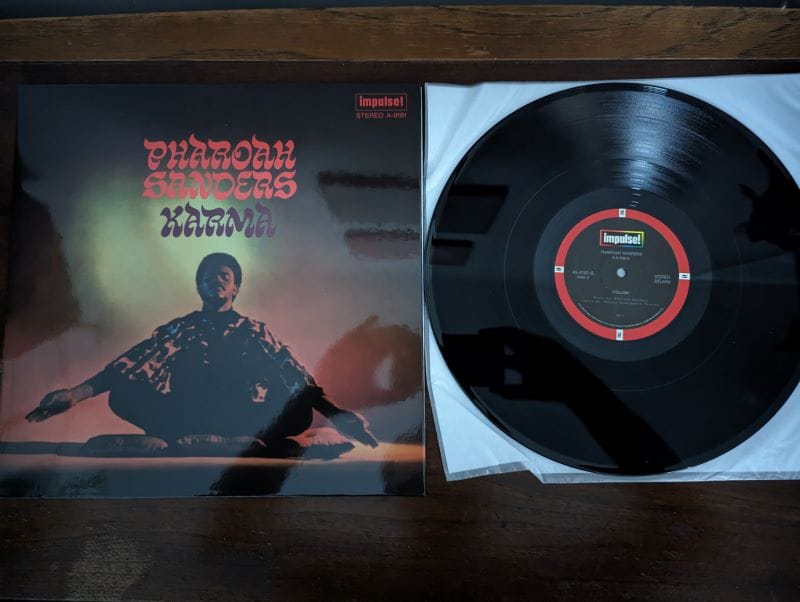
No. 1447: Pharoah Sanders - Karma
Jazz, like any genre, has a canon. There are certain albums you’re just supposed to have—like Kind of Blue, which I don’t. (Yes, even still! Look, I’ll eventually have it, I just know it’s always going to be available, so no rush.) Or A Love Supreme and Giant Steps, which I do! And if you lean more toward the avant garde persuasion, Pharoah Sanders’ Karma, often regarded as his greatest moment, and understandably so.
I’d maybe push back on that idea ever so gently, not because it’s not a masterpiece—it is!—but because he has a number of other records that are similarly breathtaking, groundbreaking, maybe even perfect. Thembi is one of them, a progenitor of ambient jazz with its leadoff track “Astral Traveling.” Summun Bukmun Umyun is another, hypnotic in its rhythms and lively in arrangement. And Black Unity is another still, a wild album-length frenzy of a solitary musical piece that is something like the more chaotic counterpart to this record right here.
I also bought all those records first, for entirely practical reasons: Karma goes in and out of print every so often, and in the past decade Sanders’ catalog has been gradually getting new, deluxe pressings. Which reminds me: I have a few more I need to pick up. But this was reissued shortly before my late-2022 trip to New Orleans, and I saw it as nothing less than a must-buy, and for the record (this record), it’s gorgeously packaged with a glossy, thick gatefold sleeve and a lot of care put into the finished product.
But even if I hear several other essentials in Pharoah Sanders’ catalog (there are a lot, let’s just be clear about that!), yeah, Karma is a must-have. It technically has two tracks, but “Colors” is more of a coda than anything, while “The Creator Has a Master Plan” is the reason you pick this up in the first place, a half-hour-long piece that swirls in its own cosmic atmosphere, psychedelic yet approachable, spiritual and joyful. It’s not free jazz as towering inferno, but rather an extended, communal prayer. It’s beautiful and wonderful in its sprawl, and if it’s not necessarily the only Pharoah masterpiece, it’s definitely his first, closing out the ‘60s before entering a highly productive and exploratory ‘70s. Rating: 10
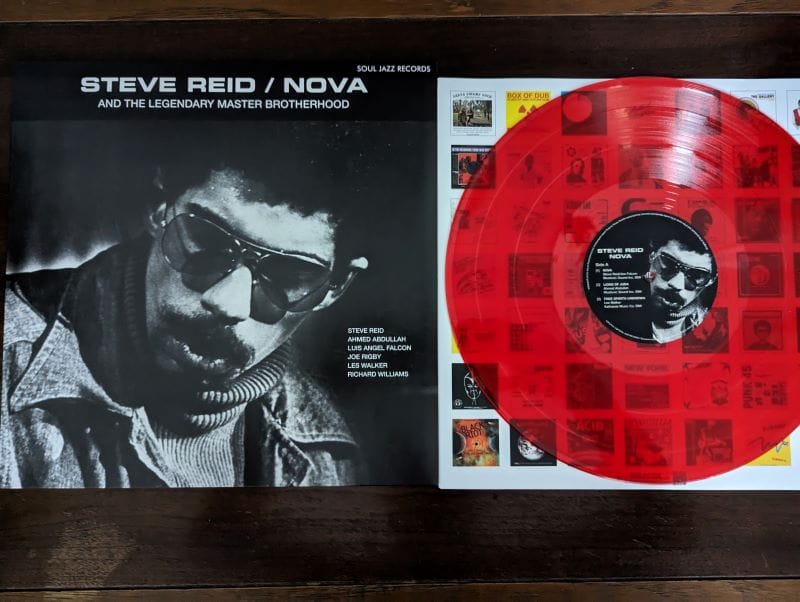
No. 1448: Steve Reid - Nova
It’s funny that Steve Reid and Four Tet should show up in the same batch of records, since Kieran Hebden and Steve Reid collaborated on a couple of records back in the ‘00s. In fact, that’s where I had first heard of Reid, and those records, while not essential by any means, were interesting enough that it eventually led me to hear more of Reid’s material, which is maybe spiritually aligned but aesthetically different.
Nova is probably his best known work, though his catalog as a bandleader isn’t that big—he’s done plenty of recordings as a drummer for everyone from Arthur Blythe to Supertramp. But Nova is its own unique and intense work, an avant garde jazz record that blazes like Ornette and grooves like Herbie. I bought this in New Orleans, like with the Pharoah record, and it seems only right to pick up some jazz records in NOLA, even if they’re not technically New Orleans jazz artists.
I can’t tell you too much about Reid himself, but I can tell you that this record smokes. The first side is the more accessible of the two, becoming gradually funkier and heavier as it goes, eventually reaching a kind of groove-laden intensity like that of Miles Davis’ Get Up With It. The flipside, meanwhile, comprises two songs that are a bit longer and a bit freer with their performances — free jazz as a fusion b-side. It’s a record that always surprises me when I put it on; I know it’s great, of course, but it’s the kind of record where it always goes harder than you expect it to. Maybe that’s on me, but a corker of a record all the same. Rating: 9.3
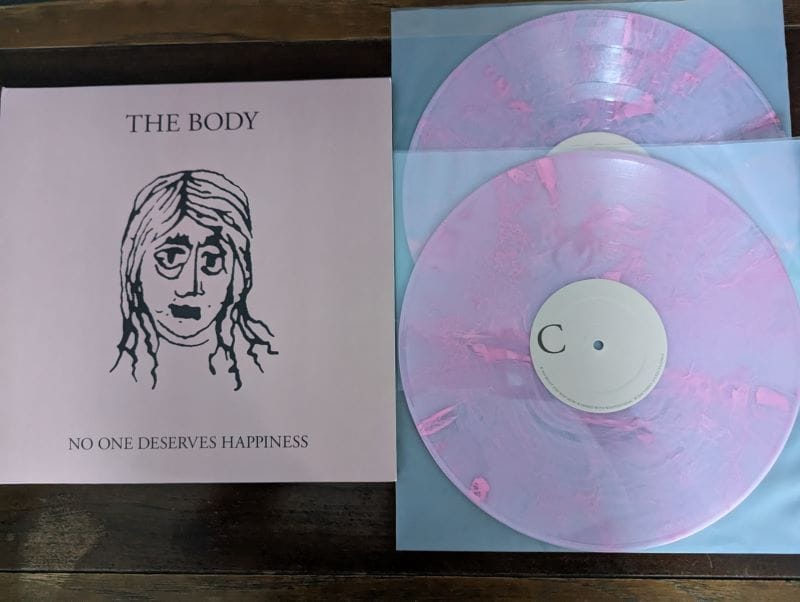
No. 1449: The Body - No One Deserves Happiness
The Body in the abstract are an abrasive, menacing band that works with a palette of noise and generally makes records that aren’t terribly accessible to those outside of underground noise and metal circles. In practice, though, they’re one of the most versatile bands in heavy music. I’m not sure that a label like “sludge metal” even really applies anymore, given that the band’s embraced electronics and industrial music in a big way—and have for more than a decade.
I have five records by The Body in my collection and I don’t think any of them really sound much alike. The previous one I wrote about was their collaboration with Uniform, Everything That Dies Someday Comes Back, which is about as killer a Nine Inch Nails and Ministry homage (that’s a compliment!) as you’re going to find. And the one I wrote about before that, their collab with Big|Brave, is a folk album! What can’t they do?!
No One Deserves Happiness is right in the band’s sweet spot. It’s sludgy, certainly, but around here they started fully diving into electro-industrial sounds. At the time they billed it as “the grossest pop album ever,” which is … fairly accurate? But also not that pop in a lot of ways, since it’s noisy and hostile and glopped in distortion. However, it’s also melodic, and features some gorgeous female vocals throughout to balance out Chip King’s Godzilla roar. (Which is effective, but admittedly limited.)
Taken altogether, it’s one of their strongest front-to-back albums, which is increasingly a crowded field. They have a lot of records. Like I said, I have only five of them, but few of them sound that much alike. Though the next one I’m writing about is more like this one than not, I suppose. And then the next one is farther afield. But I’m getting ahead of myself! Rating: 9.1
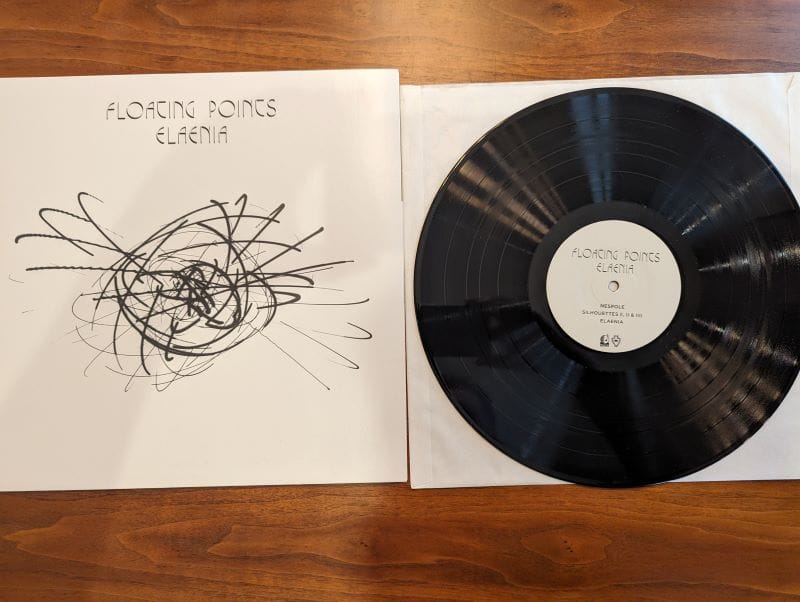
No. 1450: Floating Points - Elaenia
I’m not an electronic music purist. Maybe I’m a dilettante, though I suppose it’s more that, as we say in music journalism, I’m a “generalist.” (Which is maybe just as derogatory, depending on who you ask—not me though. I’ve never made a career strategy out of my writing beats, just whatever tickles my fancy.) I’ve known people—clubbing types, DJs and whatnot—who specifically gravitated toward pure genre spaces: techno, house, etc. I do too! See above, re: Four Tet making microhouse and whatnot. And over time I’ve gone deeper into techno, the more hypnotic the better. (Still holding out that the Sandwell District debut will get another reissue—fingers crossed!) But more often than not, it’s the electronic music that fits into those in-between spaces, the blurry crossovers between the strict genre exercises and those which can’t be categorized altogether.
Like Sam Shepherd, for instance. He’s a fascinating dude, having done his share of more concentrated IDM and tech-house singles, and holding a Ph.D. in neuroscience. I interviewed him once when he made a visit to San Diego and he talked about how excited he was to visit the Salk Institute. Not many DJs will say that.
But as Floating Points, he tends to reserve his LP real estate for sounds that don’t fit so comfortably under one specific stylistic silo. Elaenia is a prime example of that, veering between vaporous progressive electronic arpeggios and more weighty art-rock/jazz-fusion compositions. “Silhouettes (I,II,III)” is Floating Points at its best, a 10-plus minute suite of gorgeously orchestrated fusion sound that merge electric Miles with Radiohead, while closer “Peroration Six” ramps up the intensity as it escalates toward its abrupt end. It’s a masterful and marvelous set of music, one I held off buying for way too long, though a record shop in New Orleans had a copy when I was perusing its racks, so home with me it went.
Of course, it took two more days for that to happen; weather caused a bunch of canceled flights before New Year’s Eve, so we had to book two more nights while we were there. We went through a series of attempts to reschedule and reroute our flights, to the point where we almost ended up getting back to Virginia the next day, albeit at a different airport, with the idea we’d catch a train back to Richmond after we arrived. Only problem? The train would stop running after we arrived. It, as you might imagine, didn’t work out. So instead we stayed put for a couple more days and finally arrived home on New Year’s Eve—without our bags. Woof. Rating: 9.1
Reply